
ASTM A335 covers seamless ferritic alloy-steel pipe for high-temperature service. Compare P11, P22 and P91, then use the RFQ and receiving checklist to avoid grade, testing and documentation gaps.
All pipes mentioned in this article are sold by our company.
ASTM A335 seamless alloy steel pipe is specified when a high-temperature piping system requires reliable performance under pressure, creep stress, and elevated temperature service. However, receiving an inquiry that only says “A335 pipe price” or “ASTM A335 material specification” is not enough for accurate quotation.
In real procurement workflows, buyers usually need to confirm terms such as “ASTM A335 pipe grades difference”, “P11 vs P22 vs P91 comparison”, or “ASTM A335 pipe specification PDF”. These search intents reflect a need for engineering clarity, not just pricing.
The buyer must confirm grade selection, wall thickness basis (schedule or minimum wall thickness), heat treatment condition, inspection requirements, and documentation level. P11, P22, and P91 belong to the same ASTM A335 standard, but they are not interchangeable in high-temperature design applications.
What Is ASTM A335 Pipe?
According to ASTM International, ASTM A335/A335M covers seamless ferritic alloy steel pipe for high-temperature service applications. It is widely referenced in searches such as:
- “ASTM A335 pipe meaning”
- “what is alloy steel seamless pipe”
- “high temperature boiler pipe material standard”
The pipe is designed for bending, flanging, forming, and fusion welding, making it suitable for boiler piping systems, refinery process lines, and power plant steam lines.
The standard includes both nominal wall thickness pipe and minimum wall thickness pipe, which is a critical distinction in procurement. Many RFQ errors come from misunderstanding this, especially in searches like “ASTM A335 schedule vs thickness difference”.
ASTM A335 applies only to pipe. Related components follow different standards:
- ASTM A234 for alloy steel butt-weld fittings
- ASTM A182 for forged flanges
- ASME B16.9 for dimensional fitting standards
Correct system matching is essential in piping material specification (PMS) and piping class selection.
Key Technical Characteristics of ASTM A335 Pipe
ASTM A335 is referenced when seamless ferritic alloy steel pipe is required for elevated temperature service. In real engineering documentation, it is often associated with boiler piping systems, refinery steam lines, and power plant headers rather than general industrial piping.
When buyers search for “what is ASTM A335 pipe used for” or “alloy steel seamless pipe for high temperature service”, they are usually trying to understand whether this material is suitable for steam, pressure, or creep conditions in their system.
The standard itself covers seamless pipe only, which is important because welded alternatives fall under different specifications. This distinction becomes critical during material approval in EPC projects, especially when piping classes are being finalized.
Another point that often causes confusion is wall thickness definition. ASTM A335 allows both nominal wall and minimum wall basis, and this is where many RFQ mismatches originate. Two suppliers may quote the same schedule, but the acceptance criteria behind it can still differ.
Where ASTM A335 Pipe Is Actually Used
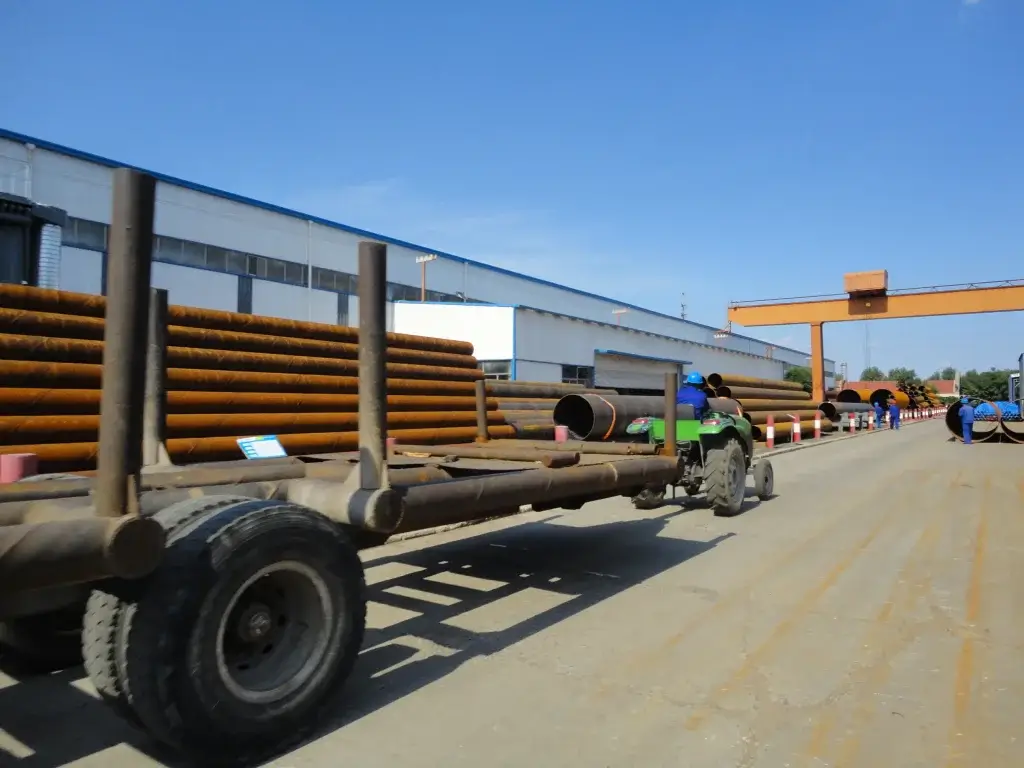
ASTM A335 is not intended for general structural piping or low-temperature water service.
In real project environments, ASTM A335 pipe is not selected randomly. It is usually tied to specific high-temperature systems where long-term creep resistance becomes a design driver.
You will most often see it in main steam lines, hot reheat piping, boiler headers, and high-pressure steam distribution systems in power plants. In refinery and petrochemical units, it appears in furnace outlet lines and cracking unit piping where temperature stability is more critical than corrosion alone.
Search behavior like “ASTM A335 pipe application in power plant” or “boiler alloy steel pipe material selection” usually comes from engineers trying to match material grade with ASME B31.1 or B31.3 design requirements.
At this stage, material selection is no longer about pipe alone. It becomes a system-level decision involving allowable stress values, design temperature, corrosion allowance, and expected creep life over decades of operation.
ASTM A335 P11, P22, P91 Grades Comparison
| Grade | Alloy System | Typical Project Use | Application Focus | Buyer Concern |
|---|---|---|---|---|
| P11 | 1.25Cr–0.5Mo | “P11 pipe specification” | Moderate temperature steam lines | Welding procedure & heat treatment |
| P22 | 2.25Cr–1Mo | “P22 vs P11 difference” | Boiler & refinery piping | Hardness control & PWHT |
| P91 | 9Cr–1Mo–V–Nb | “P91 material properties” | Ultra-high temperature power plants | Traceability & fabrication control |
Although these grades sit under the same ASTM A335 umbrella, grade substitution requires formal engineering approval. This is one of the most common misunderstandings in procurement discussions.
P11 is generally used in moderate temperature steam systems where fabrication simplicity and welding stability are more important than maximum creep strength. P22 moves into higher chromium-molybdenum content, which improves resistance in boiler and refinery environments where temperature exposure is more severe.
P91, on the other hand, is often associated with ultra-supercritical power plants. It offers significantly higher strength, but that performance comes with stricter requirements in heat treatment, welding control, and traceability.
This is why search queries like “can P91 replace P22 pipe” or “P11 vs P22 vs P91 difference in boiler piping” are not just academic—they directly affect fabrication cost, welding procedure qualification, and long-term reliability.
In real engineering decisions, grade selection is less about material comparison and more about system risk control.
ASTM A335 Testing, Inspection and Traceability
When procurement teams search for “ASTM A335 pipe test requirements” or “what is included in mill test certificate”, they are usually trying to reduce supply risk rather than understand metallurgy.
A compliant ASTM A335 supply is not defined by the pipe alone, but by the documentation and verification chain behind it. Chemical analysis, tensile testing, hardness control, hydrostatic testing, and non-destructive examination all form part of the acceptance process.
For higher alloy grades such as P22 and P91, hardness and heat treatment verification become especially important because small deviations can affect long-term creep performance.
Positive Material Identification (PMI) is often requested in modern EPC projects. It is useful for confirming alloy composition on site, but it does not replace mechanical testing or full mill certification. This is a common misunderstanding in procurement specifications.
Traceability is equally important. Heat numbers must remain consistent from raw material to finished pipe, and this is verified through mill test certificates issued under EN 10204 3.1 or 3.2 depending on project requirements.
ASTM A335 vs ASTM A106 in Real Selection Decisions
| Item | ASTM A335 | ASTM A106 |
| Material | Ferritic alloy steel | Carbon steel |
| Product form | Seamless pipe | Seamless pipe |
| Common grades | P11, P22, P91 | A, B, C |
| Main focus | Alloy pipe for high-temperature service | Carbon steel for high-temperature service |
One of the most frequently searched comparisons is “ASTM A335 vs A106 pipe difference”, especially in cost-driven procurement discussions.
The key difference is not only material composition but also service expectation. ASTM A106 is carbon steel and is widely used in general high-temperature piping systems. ASTM A335, however, is designed for alloy-based creep resistance in more demanding environments.
ASTM A106 cannot replace ASTM A335 without an engineering review.
In practical engineering terms, A106 may perform adequately in many process systems, but it cannot simply replace A335 in steam or high-temperature creep service without a full design review.
This is where many project delays occur—when material substitution is attempted without revisiting ASME allowable stress values, welding procedures, and long-term operating conditions.
How to Order ASTM A335 Pipe
A complete RFQ must identify the grade, wall-thickness basis, heat treatment, inspection scope and documentation level.
A complete RFQ should state:
- ASTM A335/A335M edition and grade
- NPS or outside diameter
- Schedule or specified wall thickness
- Nominal-wall or minimum-wall basis
- Quantity and required lengths
- Plain or beveled ends
- Heat-treatment requirements
- NDT, hydrostatic, hardness and PMI scope
- EN 10204 3.1, 3.2 or third-party inspection requirements
- Marking, coating, end protection and packaging
This information allows suppliers to quote on the same technical basis. It also reduces clarification rounds and documentation disputes.
Request a Steel Pipe Inspection Plan
PANDAPIPE supplies seamless carbon and alloy-steel pipe for boiler, power-generation and industrial piping projects. Send us your ASTM A335 grade, size, wall thickness, quantity and inspection requirements. We can review the RFQ and quote against the required testing, documentation, marking and packaging scope.
Send your ASTM A335 pipe specification to PANDAPIPE for a technical and commercial review.
FAQs:
1. Is ASTM A335 Pipe Seamless or Welded?
ASTM A335 covers seamless ferritic alloy-steel pipe. Welded alloy pipe must be ordered under another applicable specification.
2. What Are the Common ASTM A335 Grades?
P11, P22 and P91 are widely specified. P5, P9 and other grades are also available for particular project conditions.
3. What Is the Difference Between P11 and P22?
They have different chromium and molybdenum ranges. This affects their properties, allowable stresses and fabrication requirements.
4. Can ASTM A335 P91 Replace P22?
Not automatically. P91 requires different welding, filler-metal and heat-treatment controls. Substitution requires engineering approval.
5. Can ASTM A106 Replace ASTM A335?
Not without a design review. ASTM A106 is carbon steel, while ASTM A335 covers ferritic alloy steel.
6. Does ASTM A335 Require Heat Treatment?
Yes. The permitted treatment depends on the grade and applicable standard edition. Verify the recorded condition on the MTC.
7. Is PMI Enough to Accept ASTM A335 Pipe?
No. PMI identifies alloy composition but does not confirm mechanical properties, heat treatment, dimensions or complete traceability.
8. What Documents Should the Supplier Provide?
Request an MTC plus the heat-treatment, NDT, hydrostatic, PMI and third-party reports specified in the purchase order.

 English
 Deutsch
 Español
 Português
 Nederlands
 Italiano
 Français
 Русский
 Українська
 العربية
 日本語
 한국어
 Bahasa Indonesia